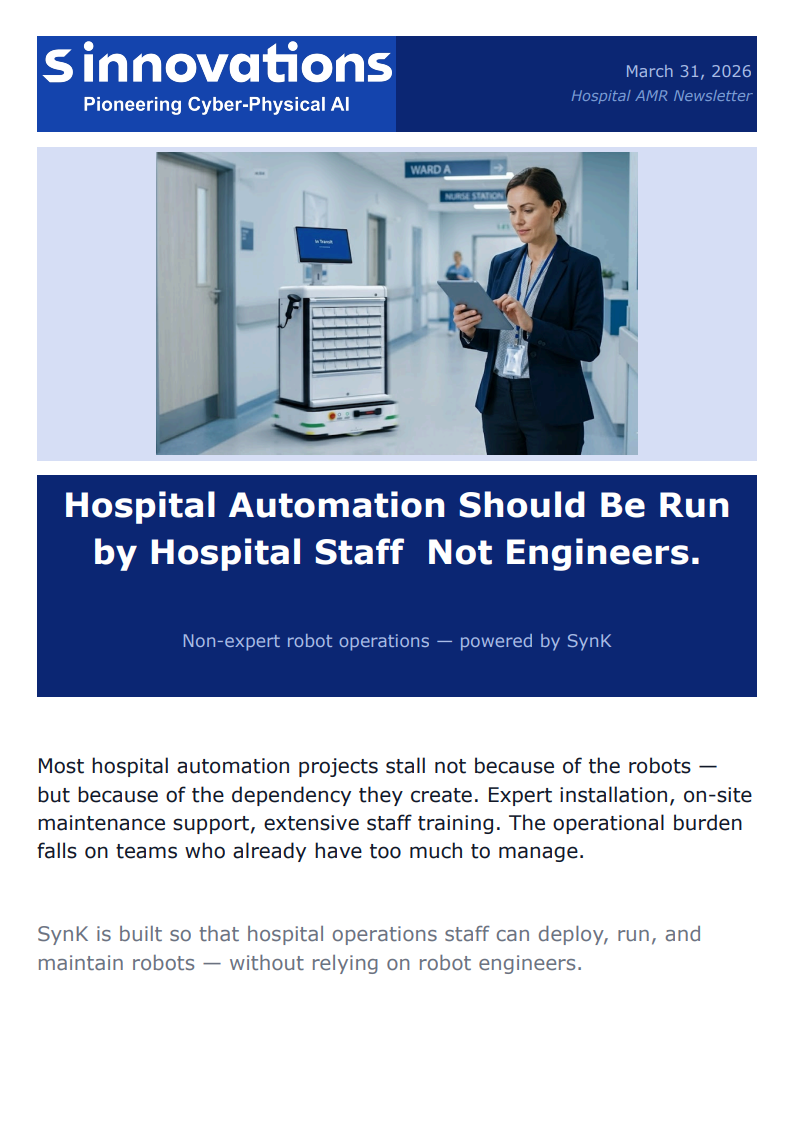
Most hospital automation projects stall not because of the robots — but because of the dependency they create. Expert installation, on-site maintenance support, extensive staff training. The operational burden falls on teams who already have too much to manage.
The Challenge: Engineer Dependency Never Goes Away
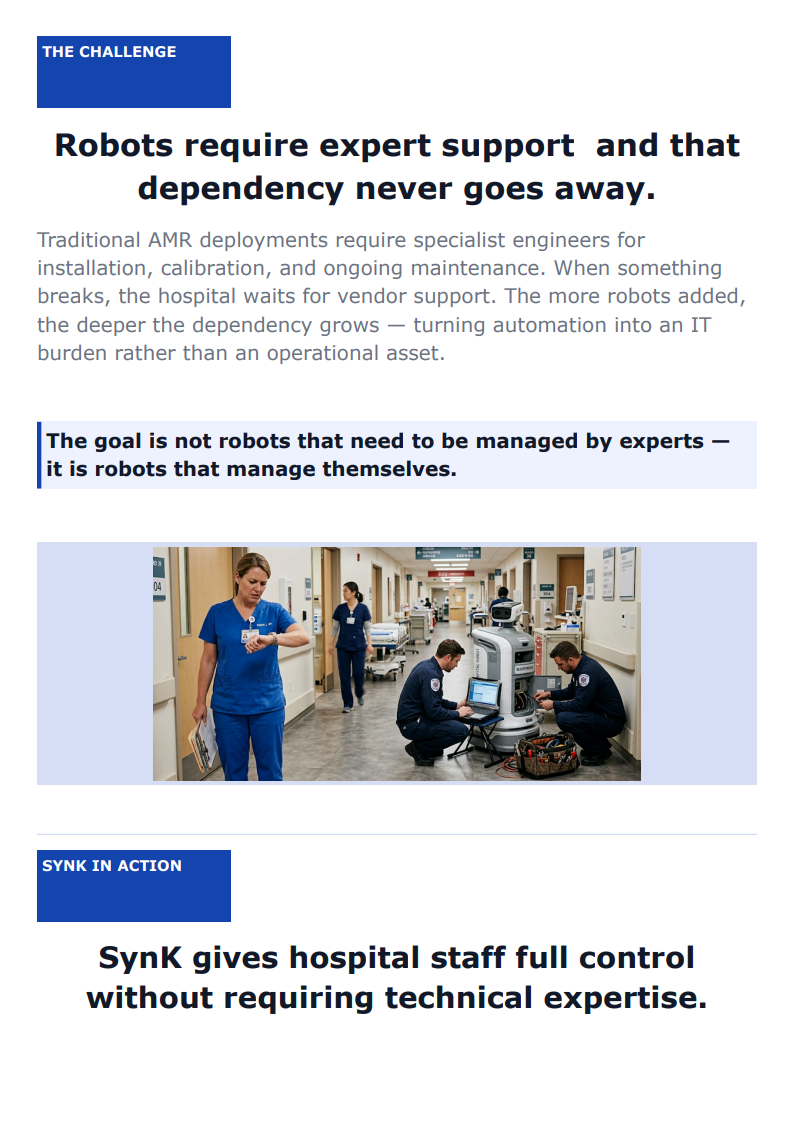
Traditional AMR deployments require specialist engineers for installation, calibration, and ongoing maintenance. When something breaks, the hospital waits for vendor support. The more robots added, the deeper the dependency grows — turning automation into an IT burden rather than an operational asset.
The goal is not robots that need to be managed by experts — it is robots that manage themselves.
SynK: Empowering Hospital Staff with True Automation
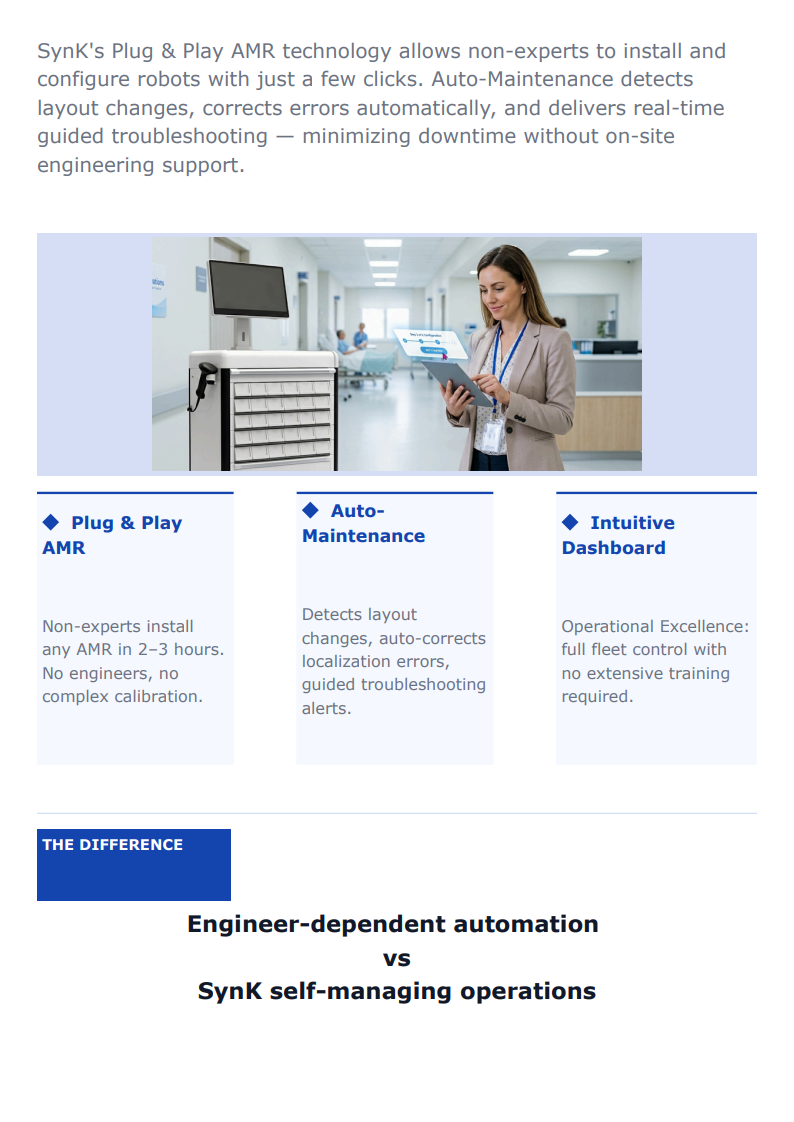
SynK is built so that hospital operations staff can deploy, run, and maintain robots — without relying on robot engineers.
Three Core Capabilities:
Plug & Play AMR
Non-experts install any AMR in 2–3 hours. No engineers, no complex calibration required.
Auto-Maintenance
Detects layout changes, auto-corrects localization errors, guided troubleshooting alerts — minimizing downtime without on-site engineering support.
Intuitive Dashboard
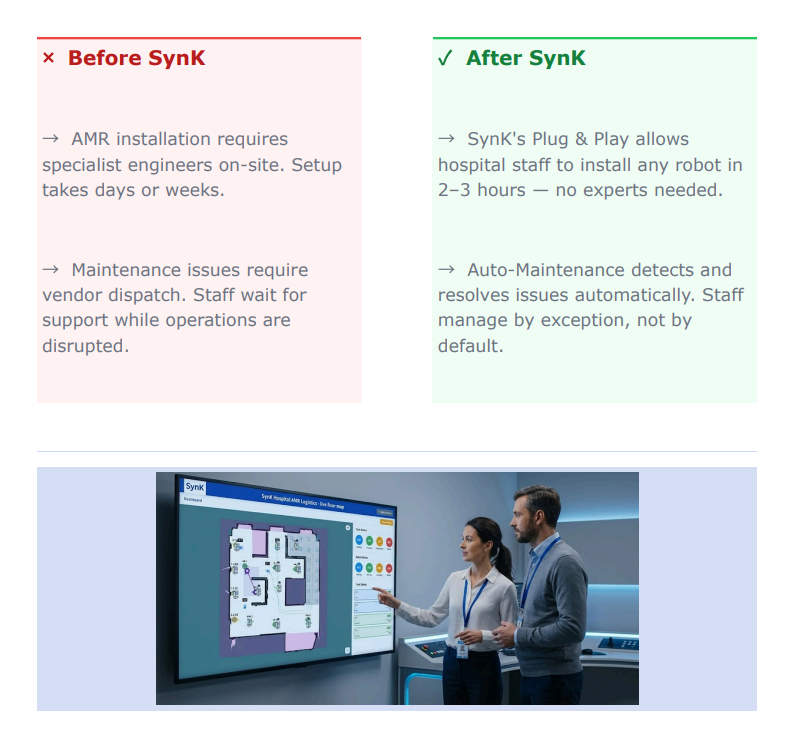
Operational excellence: full fleet control with no extensive training required.
Before vs. After SynK
Before SynK:
- AMR installation requires specialist engineers on-site. Setup takes days or weeks.
- Maintenance issues require vendor dispatch. Staff wait for support while operations are disrupted.
After SynK:
- SynK's Plug & Play allows hospital staff to install any robot in 2–3 hours — no experts needed.
- Auto-Maintenance detects and resolves issues automatically. Staff manage by exception, not by default.
Automation your team can actually run without becoming robot experts.
See how SynK's Plug & Play and Auto-Maintenance capabilities let hospital operations staff take full control of robot deployment and management.


Most hospital automation projects stall not because of the robots — but because of the dependency they create. Expert installation, on-site maintenance support, extensive staff training. The operational burden falls on teams who already have too much to manage.
The Challenge: Engineer Dependency Never Goes Away
Traditional AMR deployments require specialist engineers for installation, calibration, and ongoing maintenance. When something breaks, the hospital waits for vendor support. The more robots added, the deeper the dependency grows — turning automation into an IT burden rather than an operational asset.
The goal is not robots that need to be managed by experts — it is robots that manage themselves.
SynK: Empowering Hospital Staff with True Automation
SynK is built so that hospital operations staff can deploy, run, and maintain robots — without relying on robot engineers.
Three Core Capabilities:
Plug & Play AMR Non-experts install any AMR in 2–3 hours. No engineers, no complex calibration required.
Auto-Maintenance Detects layout changes, auto-corrects localization errors, guided troubleshooting alerts — minimizing downtime without on-site engineering support.
Intuitive Dashboard Operational excellence: full fleet control with no extensive training required.
Before vs. After SynK
Before SynK:
After SynK:
Automation your team can actually run without becoming robot experts.
See how SynK's Plug & Play and Auto-Maintenance capabilities let hospital operations staff take full control of robot deployment and management.