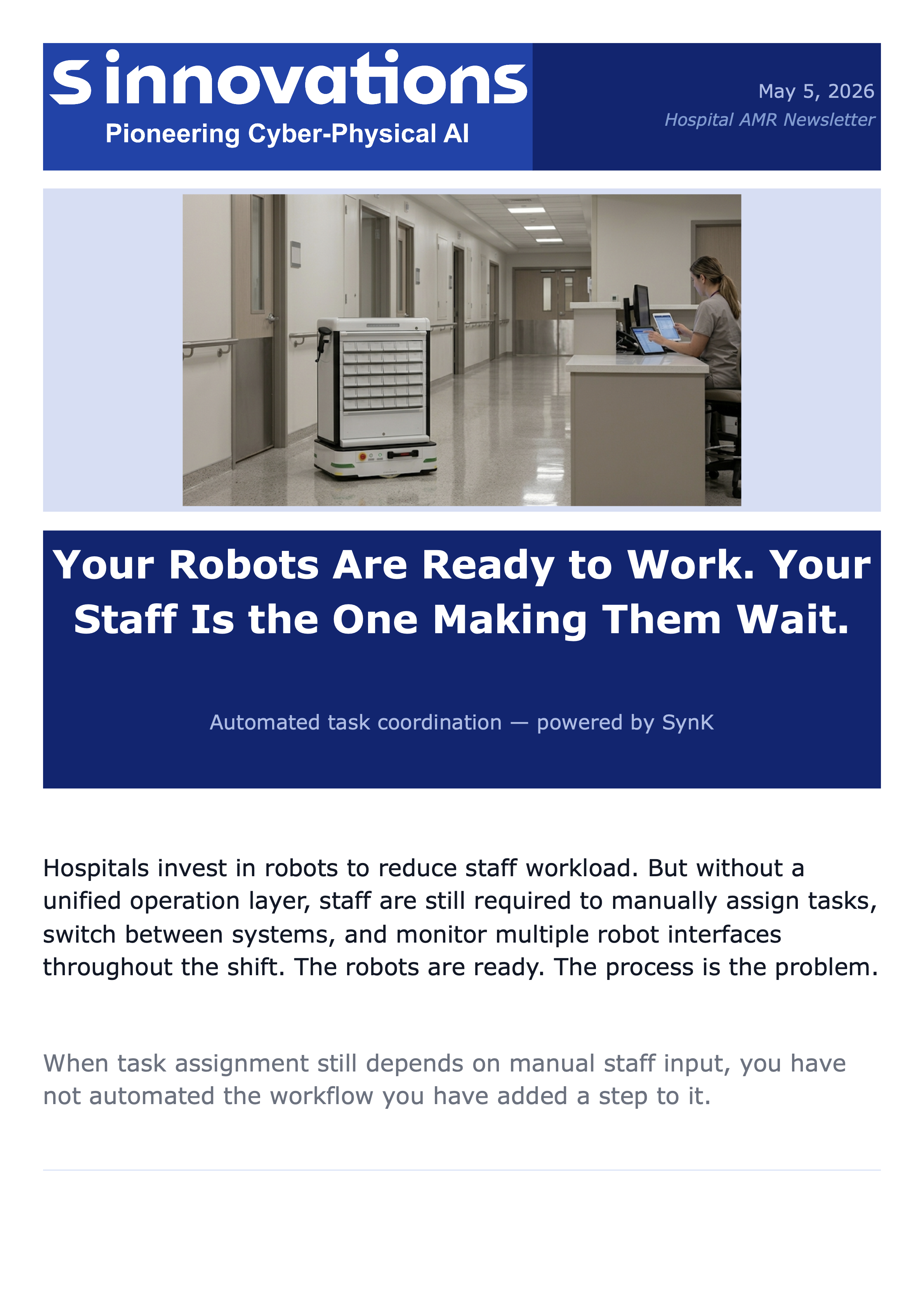
Automated hospital AMR task coordination — powered by SynK
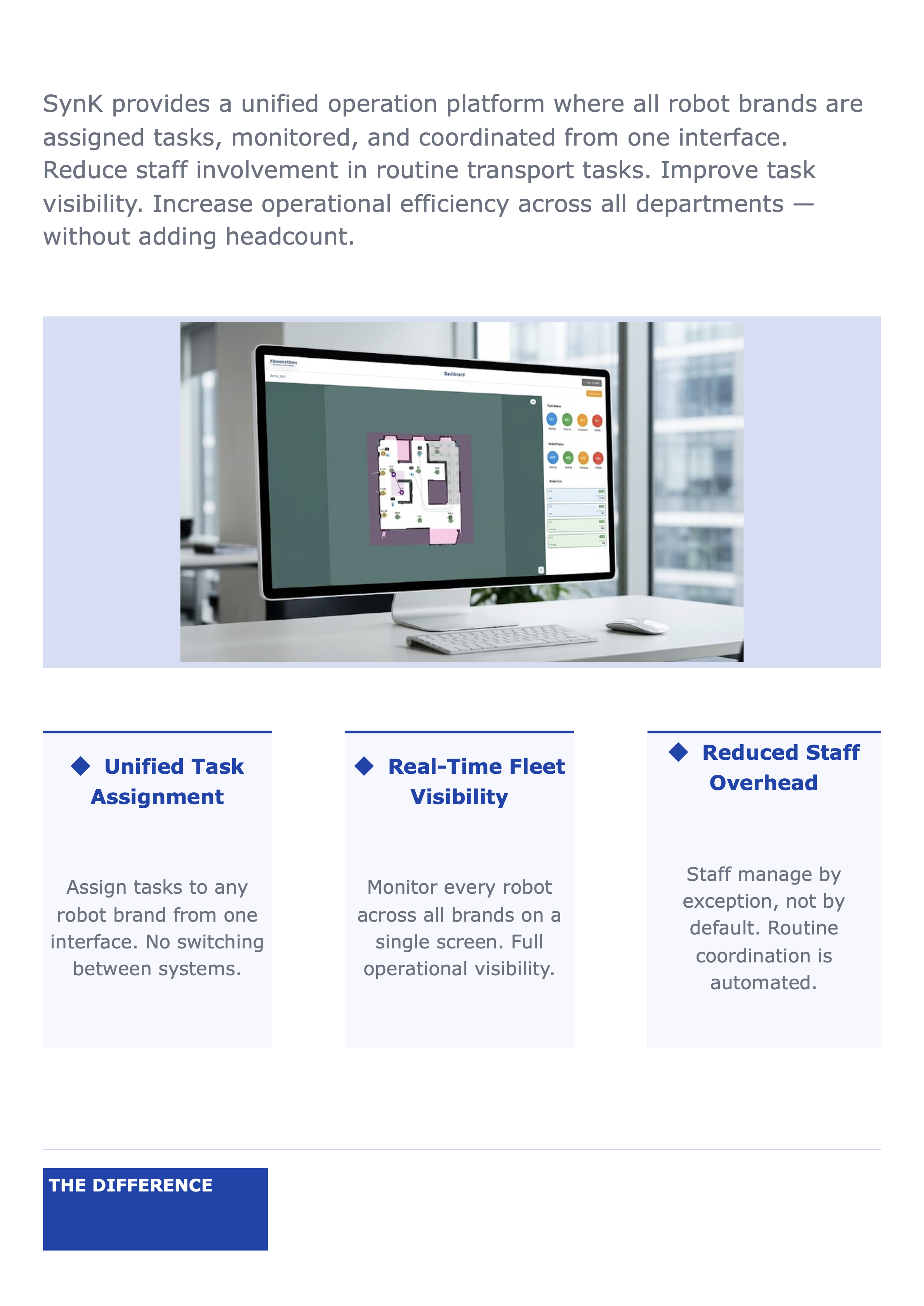
When task assignment still depends on manual staff input across multiple vendor apps, automation is unfinished — the work has only been relocated. SynK unifies task assignment, fleet visibility, and coordination across every robot brand in a single interface, so the fleet grows without growing the staff burden.
Why fragmented control undermines AMR ROI
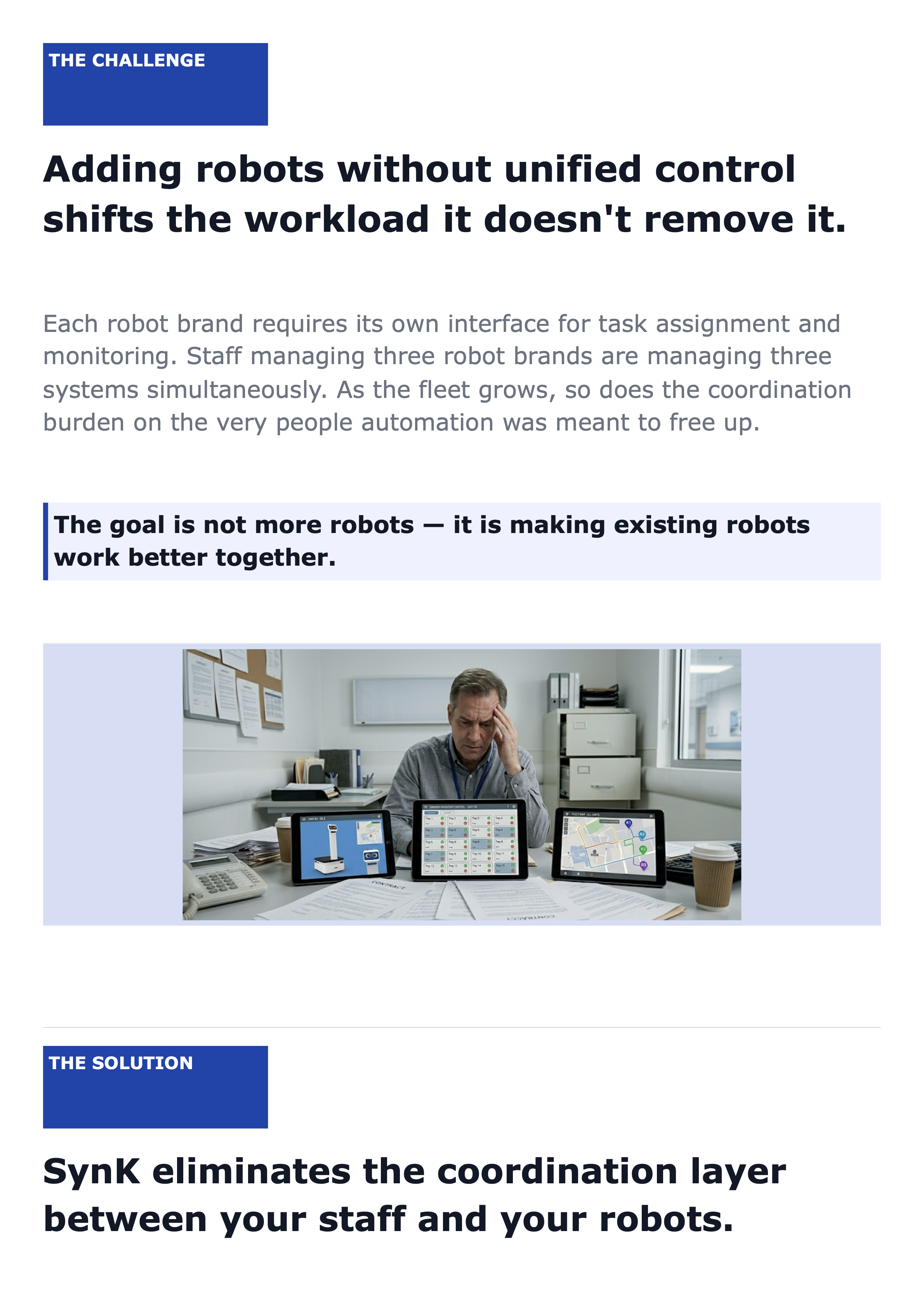
Each robot brand requires its own interface for task assignment and monitoring. Staff managing three brands manage three systems simultaneously. As the fleet grows, the coordination burden grows on the very people automation was meant to free. The goal is not more robots — it is making existing robots work better together.
How SynK eliminates the coordination layer
- Unified Task Assignment — Assign tasks to any robot brand from one screen.
- Real-Time Fleet Visibility — Monitor every robot, every brand, on a single dashboard.
- Reduced Staff Overhead — Staff manage by exception, not by default.
Before SynK vs. After SynK
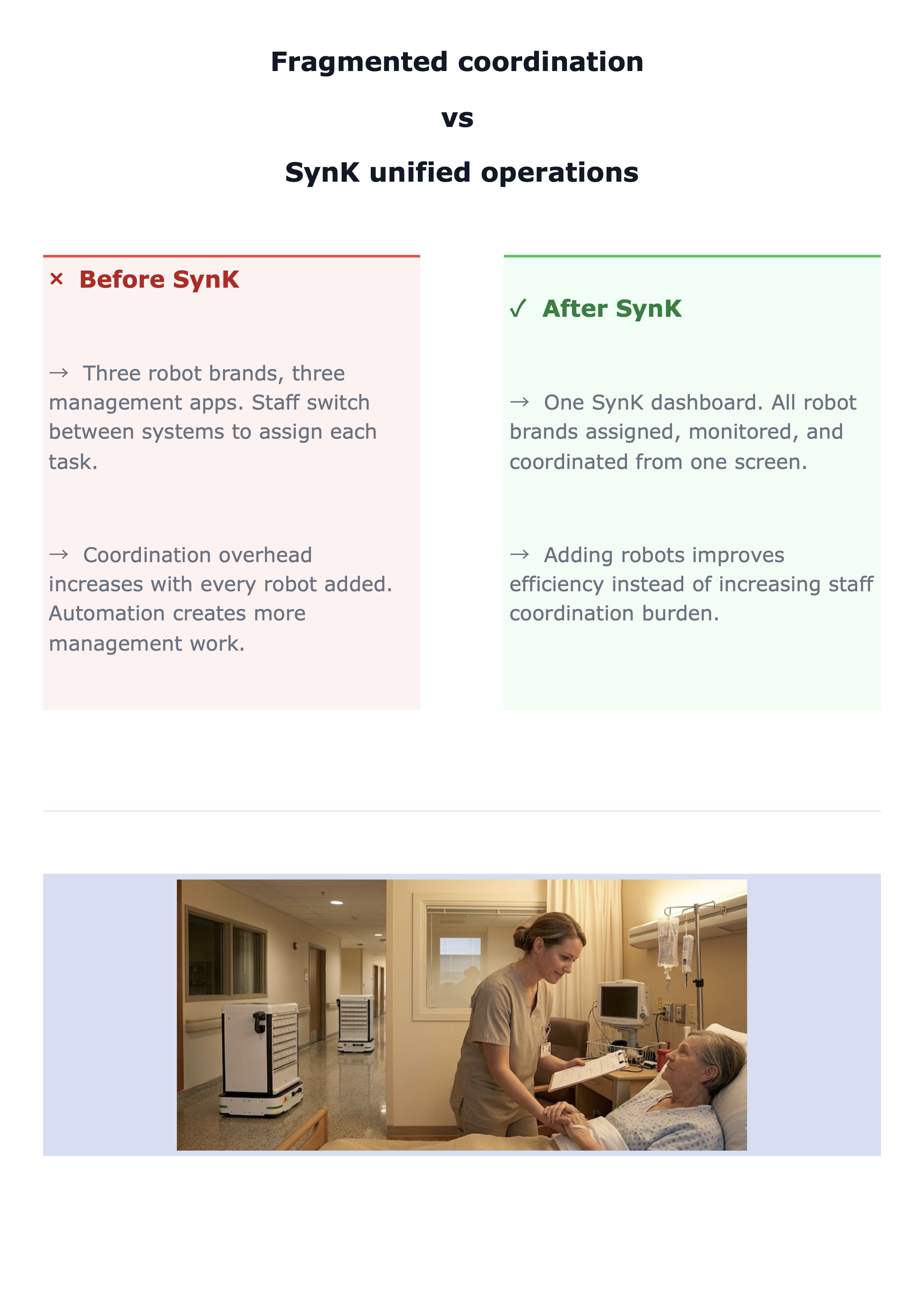
Before, three robot brands meant three management apps and constant context switching. After SynK, every task is assigned, monitored, and coordinated from one screen — and adding robots increases efficiency instead of management work.
FAQ
Q. Can SynK assign tasks across different robot brands?
Yes. SynK provides unified task assignment across all connected AMR brands.
Q. Does SynK provide real-time fleet visibility?
Yes. Every robot is monitored on a single live dashboard.
Q. Does SynK reduce hospital staff workload? Yes. Staff move from active coordination to exception-only management.


Automated hospital AMR task coordination — powered by SynK
When task assignment still depends on manual staff input across multiple vendor apps, automation is unfinished — the work has only been relocated. SynK unifies task assignment, fleet visibility, and coordination across every robot brand in a single interface, so the fleet grows without growing the staff burden.
Why fragmented control undermines AMR ROI
Each robot brand requires its own interface for task assignment and monitoring. Staff managing three brands manage three systems simultaneously. As the fleet grows, the coordination burden grows on the very people automation was meant to free. The goal is not more robots — it is making existing robots work better together.
How SynK eliminates the coordination layer
Before SynK vs. After SynK
Before, three robot brands meant three management apps and constant context switching. After SynK, every task is assigned, monitored, and coordinated from one screen — and adding robots increases efficiency instead of management work.
FAQ
Q. Can SynK assign tasks across different robot brands?
Yes. SynK provides unified task assignment across all connected AMR brands. Q. Does SynK provide real-time fleet visibility?
Yes. Every robot is monitored on a single live dashboard. Q. Does SynK reduce hospital staff workload? Yes. Staff move from active coordination to exception-only management.